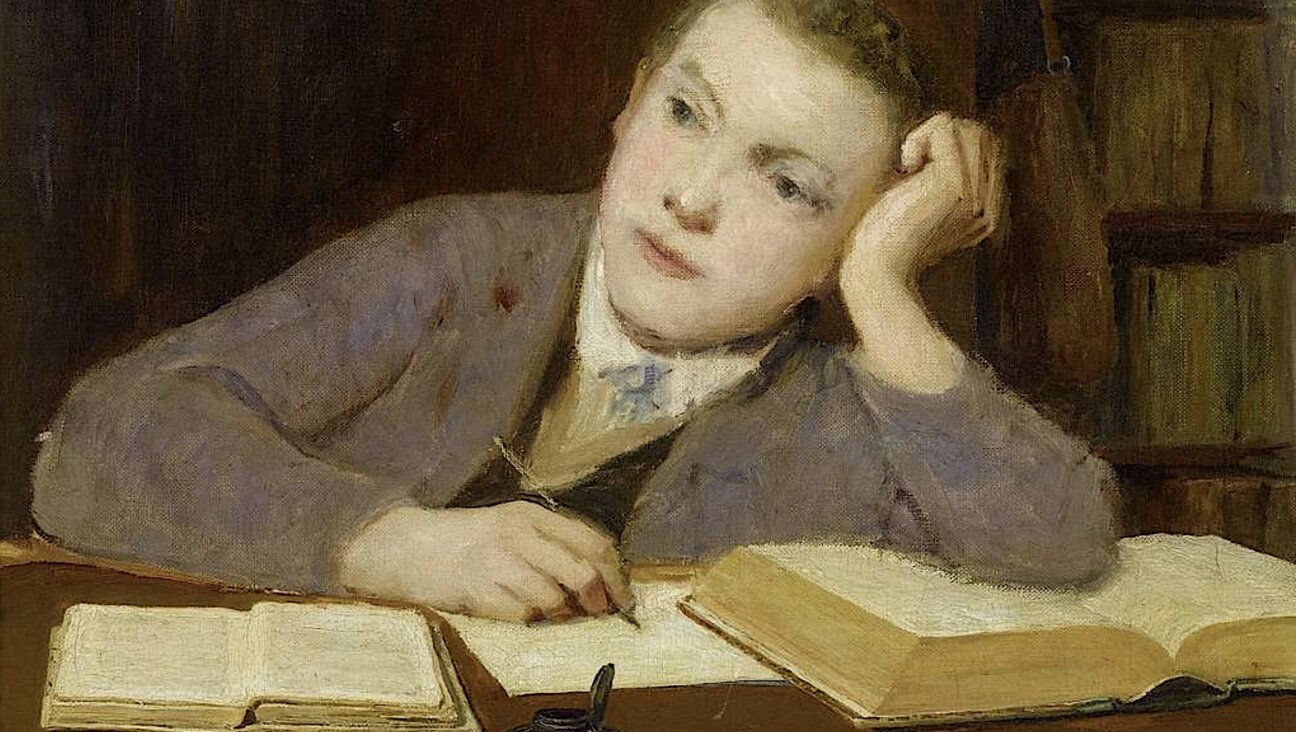
Glimpsing the World of Holocaust Memoir
Graphic by Angelie Zaslavsky
What exactly is “personal history”? Is it a cousin of political history, cultural history or revisionist history — an account steeped in perspective before objective truth — or is it just a fancy term for “memoir”? With a spate of memoirs-turned-fiction rattling book stalls, the Holocaust chronicles, published this year, chosen for review this week confront head-on the fine lines among scholarship, memoir and imagination, and show the increasing importance of second- and third-generation narratives — the retelling of a parent’s or grandparent’s experiences during the Shoah as filtered through the descendant’s research and remembrance.


There is something wrenchingly banal about Rutka’s musings on teenage longing, all the more so when she consciously positions her journey toward womanhood as a more deserving — and more difficult — subject for reflection than her political situation. “But how shrewd I am, I have written already so much about the war and nothing about myself,” she writes one day, having taken a short break from self-criticism to describe the violence that is about to consume her.
The journal begins in January 1943, already four years into Rutka’s imprisonment, and ends abruptly that April, before Rutka’s deportation to another ghetto and, ultimately, her death. In Bedzin, Rutka’s primary experience seems to have been one of soul-crushing boredom (her final words in print were “I have nothing to do”). The unwritten epilogue, in which things only get worse, looms over this short, haunting fragment.

Unfortunately, Schwartz brings a stubbornly Manichean perspective to her investigation. She attempts to classify the Germans she speaks to and the town itself as either good or bad, anti-fascist or antisemitic. As a result, her perceptions careen between willful naiveté and paranoia, leaving little room for ambiguity.
In a typical encounter, an interviewee mentions that his grandparents received a copy of “Mein Kampf” as a wedding present. “Whoa! Is he a Nazi?” Schwartz asks herself, surprised by the man’s willingness to come clean about his ancestors’ politics. “But then he says, ‘What a lot of crap! How could people believe such rubbish!’ I relax.” More suspicion, and more mollification, follows in close pursuit.
Though Schwartz finally concludes — not unpredictably — that it may not be possible to measure the morality of a town, the path she takes to get there is tedious for the reader.

Hello, fellow Forward reader! I’m Joel Brown, a Forward reader and supporter for more than 15 years, and currently the chair of the board of directors.
I’m an avid Forward reader because it ticks so many of my essential boxes: excellent journalism, Jewish focus and diverse viewpoints. In today’s political climate, what I most appreciate is the Forward’s independence — made possible by the generosity of its membership.
The Forward is committed to bringing you unbiased, nuanced Jewish news. From my position as board chair, I see an exciting future as we expand our position as the definitive independent voice of contemporary American Judaism.
That’s why I’m paying it Forward, by matching $36,000 of reader gifts. It’s an investment in the Forward’s newsroom, to continue telling the American Jewish story with truth and independence.
— Joel Brown, Forward board chair
Support our mission to tell the Jewish story fully and fairly.