Making Progress, Bit by (Rib)Bit
In their research on Fanconi anemia, Maureen Hoatlin and her four associates at the Oregon Health & Science University have been getting groundbreaking help from a small, slimy source. Hoatlin’s lab has shown that the African clawed frog (Xenopus laevis) has Fanconi genes and can be used to understand the complex set of proteins that protects our cells from cancer. “The normal function of the Fanconi genes is not completely understood,” Hoatlin explained, “but every time a cell replicates, damage can occur, and Fanconi genes are somehow preventing that damage.”
Fanconi anemia, caused by a defect in any one of the 13 Fanconi genes, is a devastating genetic disease that can lead to birth defects, bone marrow failure and various cancers. One in 87 Ashkenazic Jews has one defective Fanconi gene. If two parents carry a defect in the same Fanconi gene, then each of their children has a 25% chance of having Fanconi anemia. “The frog is a great model for Fanconi anemia,” Hoatlin said. “There are genes in frogs that are surprisingly similar to the genes that control DNA replication and other crucial processes in humans.”
According to Hoatlin, there are many advantages to using frog eggs instead of human cells. “The Fanconi proteins in human cells are not easy to track down, because they’re not expressed at very high levels,” she said. The BB-sized eggs of the Xenopus laevis contain about 4,000 times as much protein as one human cell and are very proficient at DNA replication. “If humans replicated DNA that fast,” Hoatlin said, “pregnancy would last about three days.”
In addition, the internal timing of frog eggs makes them easy to manipulate. “They’re all synchronized,” Hoatlin said.” Their chemical clocks are all set at one point.” This allows Hoatlin to chemically trigger DNA replication, and it makes the measurements that help to pin down the function of the Fanconi proteins easy to record.
Because of these advantages, the frog has been a favorite scientific guinea pig from the 1950s, for early cloning experiments, through the 1980s, for observing replication. “People have used them to get insight into the fundamental processes that control vertebrate cells,” Hoatlin said. But as far as the frog and Fanconi go, Hoatlin was considered heretical when she proposed the connection. “It was frustrating at first, because not everyone believed that the Fanconi genes were really in frogs,” she said. “So we had to clone them all and prove it.”
“I like working on the edge of knowledge and pushing systems to the technical limits,” Hoatlin said about using frogs and studying Fanconi anemia. “I wanted to start a new path. [Studying] Fanconi anemia is special, because it’s going to allow us to understand a new part of the cell’s machinery that protects us all from getting cancer, a part we’ve never seen before.” And then, maybe, will come the pot of gold at the end of the rainbow. “There’s a real chance that we can find new drugs that mitigate Fanconi anemia and cancer in the general population,” Hoatlin said.
With a little help from her amphibian friends, of course.
Why I became the Forward’s Editor-in-Chief
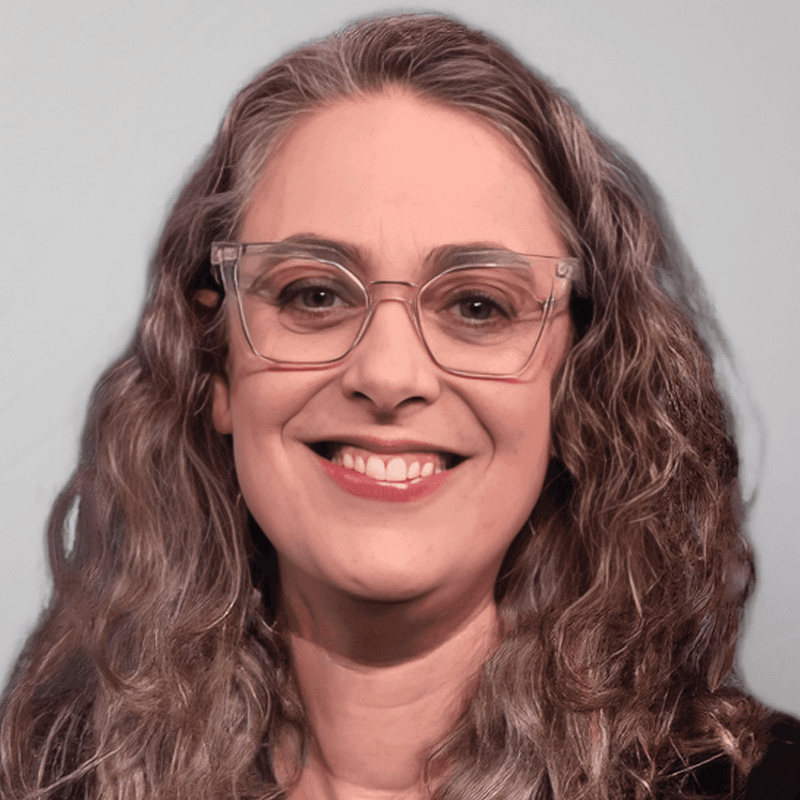
You are surely a friend of the Forward if you’re reading this. And so it’s with excitement and awe — of all that the Forward is, was, and will be — that I introduce myself to you as the Forward’s newest editor-in-chief.
And what a time to step into the leadership of this storied Jewish institution! For 129 years, the Forward has shaped and told the American Jewish story. I’m stepping in at an intense time for Jews the world over. We urgently need the Forward’s courageous, unflinching journalism — not only as a source of reliable information, but to provide inspiration, healing and hope.
Support our mission to tell the Jewish story fully and fairly.