Gilad Shalit’s Plight, and Israel’s Dilemma
There are many beautiful theories about how to bring Gilad Shalit home, but it’s an ugly fact that he now has been a captive for three years. And it’s an ugly fact that a series of Israeli governments have been unable to free him. Both diplomatic and military means have failed so far. Shalit’s family and friends blame the government for not doing enough, as do many Israelis. Others, including army officers, diplomats and the families of terror victims, argue that not every price is worth paying. Gilad, they say, does not stand alone; his life is not worth more than the lives of others.
If I were Gilad Shalit’s father, I would do everything in my power to persuade Israel’s leaders to free my son at any price. I’d be a poor father if I did anything less. If I were a government official or army officer involved in the effort to free him, I’d be telling those same leaders the opposite. I’d remind them that, whatever the political pressures they face, and whatever their empathy for the plight of this one young man, they must take into account the consequences that any military operation or diplomatic deal inevitably would have for the security of Israel’s citizens, the lives of its other soldiers and Israel’s position when facing similar situations in the future. I’d be a poor policy adviser if I did anything less.
That’s why the ugly fact of Gilad Shalit’s long years in captivity leaves me frustrated and nonplused. I’m not Gilad’s father, but I am the father of a soldier. As such, I cannot escape the possibility that my son might fall prisoner to one of Israel’s enemies. My academic training in public policy lies many years in my past, but the ethos of dispassionate, objective and rational analysis of policy options that I learned as an undergraduate remains the foundation of my thinking about public affairs.
One of our required first-year courses was in rational decision-making theory. The professor opened the first class with the question, “How much money is a human life worth?” I didn’t need to think about that. I knew that the Mishnah says, “One who saves a single life saves the entire world.” The value of a single life is thus the value of the entire world.
The professor expected that answer and praised it as a moral principle. But he quickly went on to show that it was impossible to put into practice. Say a city councilman proposes that the municipality purchase an additional ambulance. With one more ambulance, he might claim, it would be possible to save the lives of an average of five people a year who die because an ambulance does not reach them quickly enough.
Ambulances are expensive. The mishnaic principle, however, would require the city to purchase not just one more ambulance, but as many as it takes to ensure that not a single person ever dies because an ambulance doesn’t get to him in time. But if the city spends all its money on ambulances, it will have less for health care and stop signs — which might then cause other deaths. So maybe the city should take the money from some budget line where lives are not at stake. But are citizens really going to be prepared to emasculate, say, the school system or cultural budget to buy dozens of ambulances that by all accounts would stand idle most every day of the year?
And in fact Jewish tradition recognizes policy constraints. The Mishnah also requires bridegrooms to sign a ketubah, or marriage contract, that contains a clause requiring them to ransom their wives at any price. Later authorities, however, removed this clause when it proved unworkable. Rabbi Meir of Rothenburg, the 13th-century talmudist also known as the Maharam, when taken captive by Rudolf I, famously refused to allow his community to pay the exorbitant ransom the emperor demanded. The Maharam’s justification was one of policy — he argued that paying such a sum would encourage Rudolf and other potentates to kidnap Jewish leaders whenever they needed some extra cash. He died in prison.
But there’s a problem with valuing human life in a purely rational way, one that my public policy professor didn’t comprehend. It can be summed up in what I call the “Phantom Tollbooth” principle, after the classic children’s book by Norton Juster. In that story, the hero, Milo, sets out to rescue the princesses Rhyme and Reason, who are imprisoned in the Castle in the Air in the demon-infested Mountains of Ignorance. When his quest succeeds, the princesses’ brother, King Azaz, finally agrees to tell Milo the secret that he refused to tell him when he set out: that the rescue was impossible. The king says he decided not to tell Milo the secret in advance because “so many things are possible just as long as you don’t know they’re impossible.”
Gilad Shalit’s third anniversary in captivity fell just a week and a half before the 33rd anniversary of Operation Yonatan, when Israeli special forces rescued 102 hostages taken prisoner by Palestinian hijackers and held at the Entebbe airport in Uganda. Military operations are by nature risky. While the operation’s planners did all they could to take into account contingencies and possible surprises, there was no guarantee of success. Sage military policy makers might well have counseled caution; a snafu could have led to the murder of the hostages and the deaths of many soldiers.
Soldiers must believe that their comrades will take more than just strictly reasonable and rational risks to rescue them if they fall prisoner, to save their lives if they are wounded on the battlefield and to protect them while they are fighting. Few men would go to war willingly if their comrades were academically trained policy analysts. Soldiers, their parents, their friends and the society they live in rightfully demand that their leaders act with daring, boldness and courage when a soldier is held captive by enemies. Something is wrong if the conclusion the policy analysts reach is that rescue or ransom is impossible.
Here is our dilemma, and that of our leaders: As we enter Gilad Shalit’s fourth year of captivity, we must be cool and collected, and bold and courageous. We must be prepared to pay a heavy price to bring Gilad home, but we must not pay too much. I do not know what that price should be. My policy analyst’s head tells me that every price that Hamas has asked has been far too high; my father’s heart tells me that we should have paid it long ago.
Haim Watzman is the author of “A Crack in the Earth: A Journey Up Israel’s Rift Valley” (Farrar, Straus and Giroux, 2007) and “Company C: An American’s Life as a Citizen-Soldier in Israel”( Farrar, Straus and Giroux, 2005). He blogs at southjerusalem.com.
Why I became the Forward’s editor-in-chief
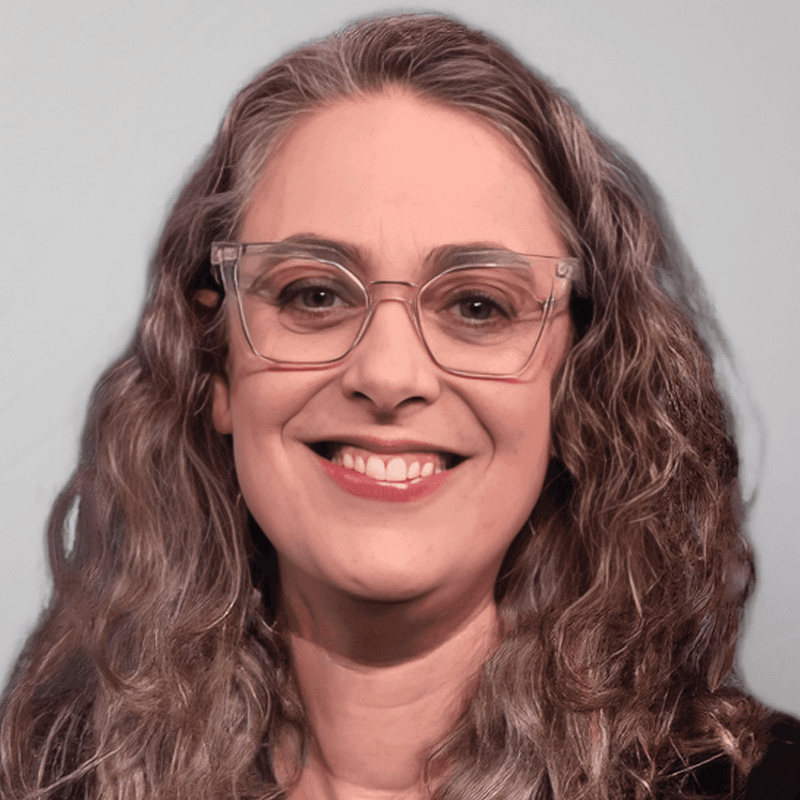
You are surely a friend of the Forward if you’re reading this. And so it’s with excitement and awe — of all that the Forward is, was, and will be — that I introduce myself to you as the Forward’s newest editor-in-chief.
And what a time to step into the leadership of this storied Jewish institution! For 129 years, the Forward has shaped and told the American Jewish story. I’m stepping in at an intense time for Jews the world over. We urgently need the Forward’s courageous, unflinching journalism — not only as a source of reliable information, but to provide inspiration, healing and hope.
 , editor-in-chief
Support our mission to tell the Jewish story fully and fairly.